Choosing the right exterior cladding for your building is not just about looks—it directly affects durability, maintenance, and long-term value. In Tamil Nadu, where buildings face intense heat, rain, and dust, selecting the correct material becomes even more important.
The three most popular options today are ACP (Aluminium Composite Panels), WPC (Wood Plastic Composite), and Glass Glazing systems. Each has its own strengths, and the right choice depends on your building type, budget, and design goals.
Table of Contents
Quick Comparison: ACP vs WPC vs Glass
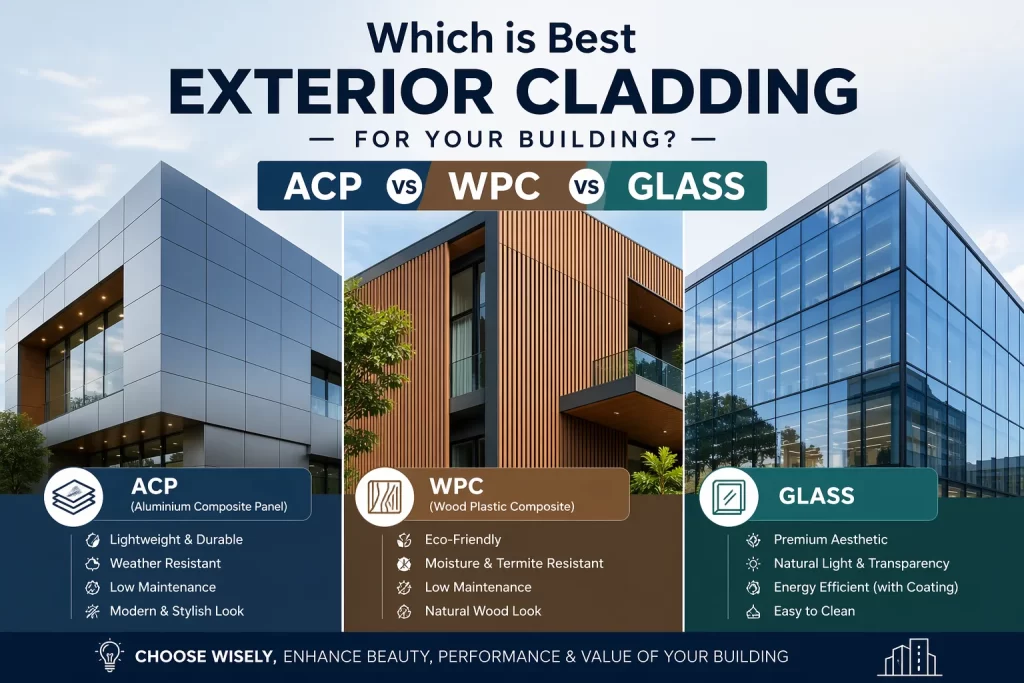
| Feature | ACP Cladding | WPC Cladding | Glass Glazing |
|---|---|---|---|
| Best For | Shops, hospitals, Wedding hall, Retail Showroom, commercial buildings | Homes, villas, Branded Showroom, decorative exteriors | Offices, showrooms, corporate buildings |
| Appearance | Modern, clean finish | Natural wood look | Premium, transparent facade |
| Durability | High | Medium–High | High |
| Maintenance | Low | Low | Medium |
| Cost | Medium | Medium–High | High |
ACP Cladding: Best for Commercial Buildings
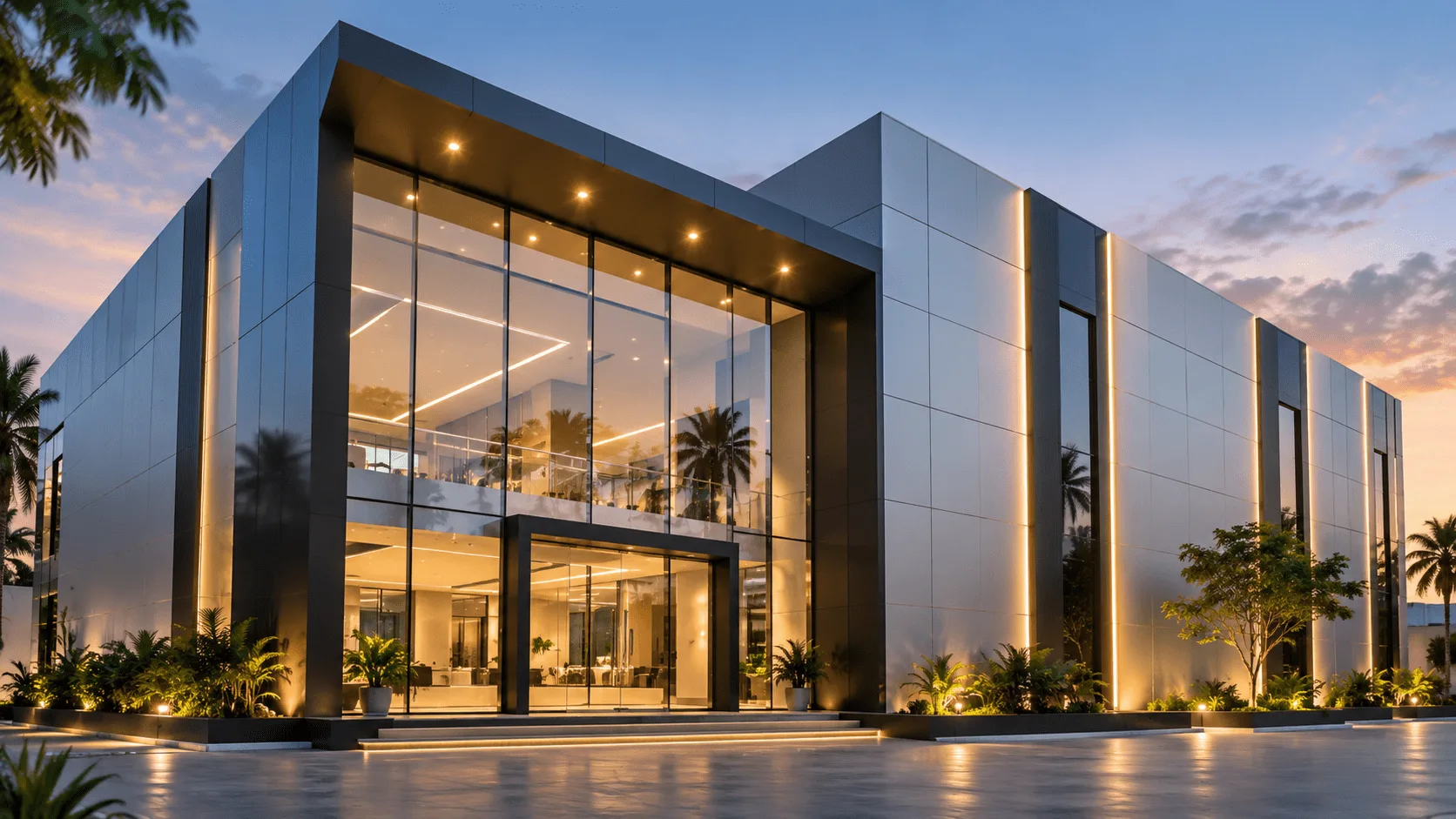
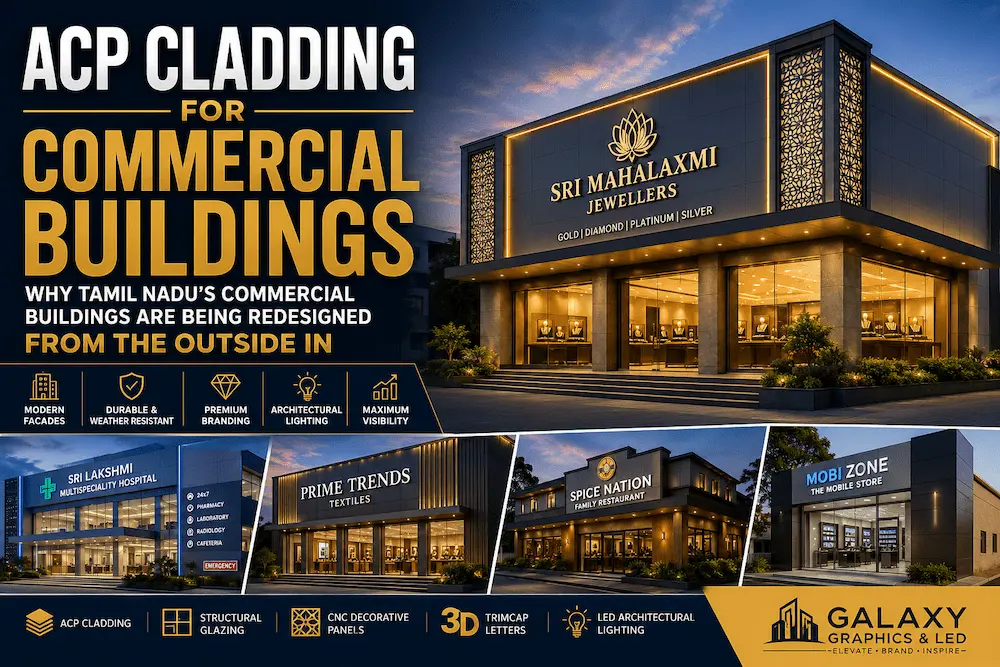
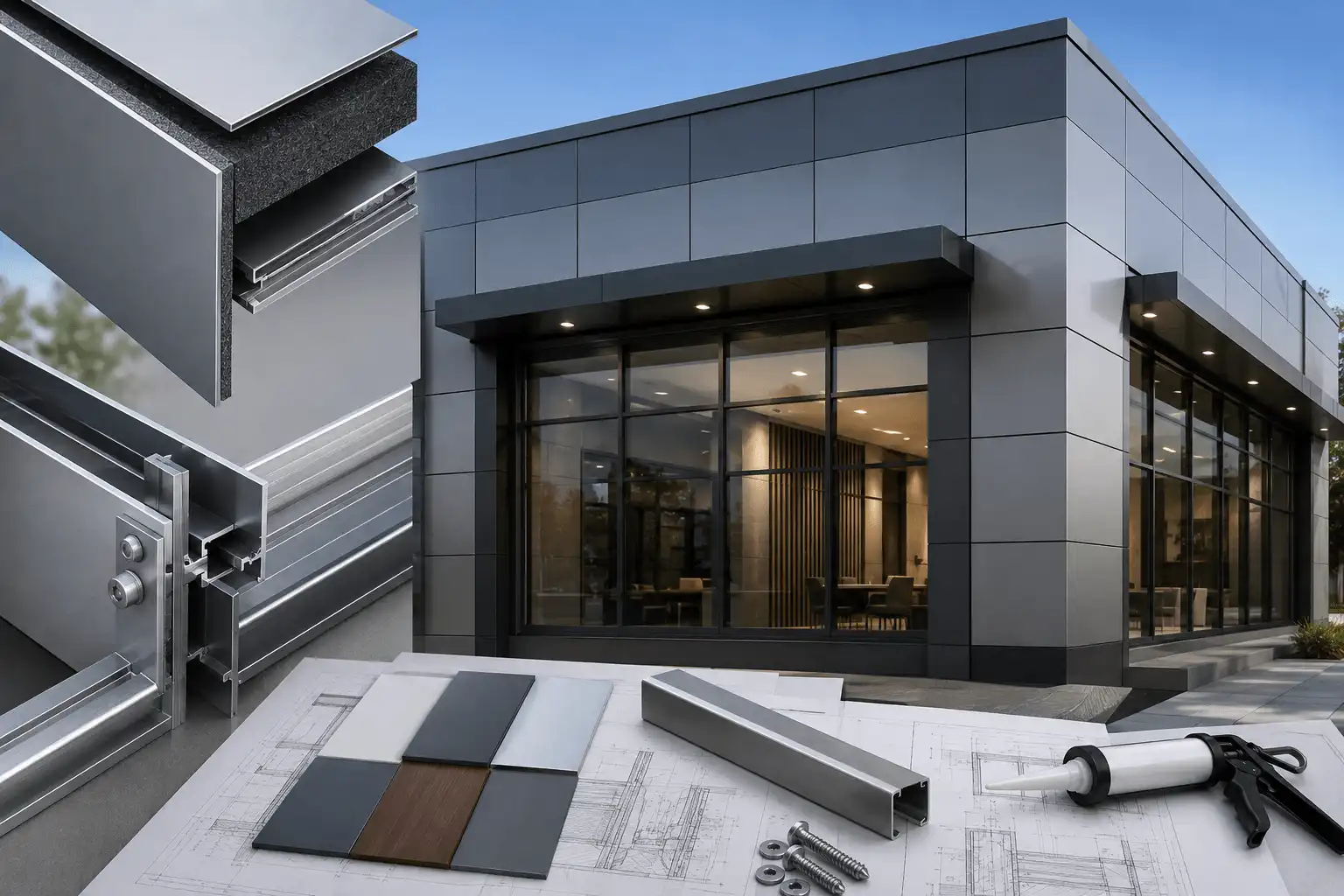
ACP cladding has become one of the most widely preferred and trusted exterior solutions for commercial projects across Tamil Nadu, and it is not difficult to understand why. Over the past decade, builders, architects, and project developers have increasingly turned to this material for its ability to combine practicality with visual appeal. At its core, ACP — or Aluminium Composite Panel — cladding consists of lightweight yet highly durable aluminium composite panels that are carefully fixed onto a strong, well-engineered framework. This framework serves as the backbone of the entire cladding system, ensuring that the panels remain securely in place even under challenging weather conditions, which is especially important given Tamil Nadu’s coastal climate and seasonal rains. Beyond its structural strength, ACP cladding offers exceptional protection to the building’s exterior walls, shielding them from moisture, dust, heat, and general wear over time. At the same time, it delivers a sleek, contemporary finish that instantly elevates the appearance of any commercial space — whether it is a corporate office, a retail showroom, a hospital, or an IT park. When it comes to brand selection, Citybond has earned a solid reputation in the market as a dependable medium range option that strikes the right balance between quality and affordability. For contractors and developers who want reliable performance without stretching the project budget unnecessarily, Citybond panels offer consistent finish quality, good weather resistance, and a decent variety of colour and texture options that meet the practical demands of most commercial projects. The panels are available in a wide range of colours, textures, and surface finishes, giving architects and designers the creative freedom to bring their vision to life without compromising on durability or budget. It is this rare combination of strength, low maintenance, and modern aesthetics — delivered at an accessible price point through trusted brands like Citybond — that has made ACP cladding a go-to choice for commercial construction projects throughout the region.ACP cladding has become one of the most widely preferred and trusted exterior solutions for commercial projects across Tamil Nadu, and it is not difficult to understand why. Over the past decade, builders, architects, and project developers have increasingly turned to this material for its ability to combine practicality with visual appeal. At its core, ACP — or Aluminium Composite Panel — cladding consists of lightweight yet highly durable aluminium composite panels that are carefully fixed onto a strong, well-engineered framework. This framework serves as the backbone of the entire cladding system, ensuring that the panels remain securely in place even under challenging weather conditions, which is especially important given Tamil Nadu’s coastal climate and seasonal rains. Beyond its structural strength, ACP cladding offers exceptional protection to the building’s exterior walls, shielding them from moisture, dust, heat, and general wear over time. At the same time, it delivers a sleek, contemporary finish that instantly elevates the appearance of any commercial space — whether it is a corporate office, a retail showroom, a hospital, or an IT park. The panels are available in a wide range of colours, textures, and surface finishes, giving architects and designers the creative freedom to bring their vision to life without compromising on durability or budget. It is this rare combination of strength, low maintenance, and modern aesthetics that has made ACP cladding a go-to choice for commercial construction projects throughout the region.
Why choose ACP?
- Excellent weather resistance (heat, rain, dust)
- Lightweight but structurally strong
- Ideal for branding and signage integration
- Low maintenance with long lifespan
Where ACP works best:
- Textile showrooms
- Jewellery shops
- Hospitals
- Retail outlets
If your goal is durability + brand visibility, ACP is usually the smartest choice.
👉 For detailed pricing, check: ACP Exterior Cladding Cost Guide in Tamil Nadu
WPC Cladding: Best for Residential & Premium Design Exterior cladding
WPC, or Wood Plastic Composite cladding, has been thoughtfully designed to offer the warm, inviting appearance of natural wood while completely eliminating the long-standing problems that have always made real wood a difficult choice for exterior applications. For years, builders and homeowners alike have admired the richness and character that a wood finish brings to a building’s facade, but the practical challenges — termite attacks, moisture absorption, warping, rotting, and the constant need for repainting or retreatment — made it a costly and high-maintenance option in the long run. WPC cladding was developed precisely to bridge this gap. By combining wood fibres with high-grade plastic polymers, manufacturers have succeeded in creating a material that carries the natural texture and earthy tone of real wood on the surface, while being completely resistant to the issues that plague traditional timber. In a region like Tamil Nadu, where humidity levels remain high for a large part of the year and termite activity is a genuine concern for property owners, WPC cladding proves to be an especially practical and reliable choice. It does not swell, crack, or splinter when exposed to rain or heat, and it requires very little maintenance beyond an occasional wipe-down to keep it looking fresh. Whether used on the exterior walls of a villa, a boutique hotel, a resort, or even a modern commercial space seeking a warmer, more organic aesthetic, WPC cladding delivers the best of both worlds — the timeless beauty of wood and the resilience of modern engineering — making it an increasingly popular choice among architects and interior designers across the region
Why choose WPC?
- Natural wood appearance
- Resistant to moisture and pests
- Ideal for modern elevation design
- Adds a premium aesthetic touch
Where WPC works best:
- Villas and independent houses
- Balconies and exterior walls
- Decorative facade sections
If your priority is design, warmth, and aesthetics, WPC Exterior cladding is the better option.
Glass Glazing: Best for Premium & Corporate Buildings exterior Cladding
Glass glazing systems, and in particular curtain wall glazing, have firmly established themselves as one of the most defining features of modern commercial architecture, transforming the way buildings look, feel, and function in today’s urban landscape. Walk through any major city in Tamil Nadu — whether it is Chennai, Coimbatore, or Madurai — and you will immediately notice how the most prominent office towers, five-star hotels, corporate headquarters, and shopping complexes are wrapped in expansive glass facades that seem to reflect the sky itself. This is the power of glass glazing done right. A curtain wall glazing system, at its core, is a non-structural outer covering of a building made entirely of glass panels supported by a lightweight aluminium framework. Unlike traditional brick or concrete walls, this system does not carry the weight of the building — instead, it hangs like a curtain from the main structure, giving architects extraordinary freedom to design floor-to-ceiling glass exteriors that were simply not possible with older construction methods. The visual impact is immediate and undeniable — buildings clad in glass glazing instantly project an image of sophistication, transparency, and forward-thinking design, which is precisely why corporate brands, luxury hospitality groups, and premium real estate developers favour this system when they want their building to make a strong first impression. Beyond aesthetics, modern glass glazing systems are engineered with high-performance glass that offers excellent thermal insulation, UV protection, and acoustic control, ensuring that the building remains comfortable and energy-efficient on the inside despite the bold, open appearance on the outside. For commercial projects where the exterior is as much a statement of brand identity as it is a functional shell, glass glazing systems continue to be the gold standard in contemporary architectural design.
Why choose Glass?
- Enhances natural light inside the building
- Creates a premium, corporate look
- Suitable for large-scale facades
- Strong and weather-resistant when properly installed
Where Glass works best:
- IT offices
- Corporate buildings
- Automobile showrooms
- Shopping complexes
If you want a high-end, modern, and professional appearance, glass glazing is the right choice.
Which One Should You Choose?
This is where most people get stuck. Here’s a clear, no-confusion guide:
- Choose ACP Cladding → if you need durability, cost-efficiency, and branding (best for shops and commercial use)
- Choose WPC Cladding → if you want a stylish, wood-like design (best for homes and villas)
- Choose Glass Glazing → if you want a premium, corporate facade (best for offices and showrooms)
👉 There is no “one best option”
👉 The best choice depends on your building purpose
Smart Approach: Combine Materials
Here’s what most contractors won’t tell you:
👉 The best elevations often use a combination of materials
Examples:
- ACP + LED signage → for retail shops
- WPC + ACP → for modern home exteriors
- Glass + ACP → for commercial facades
This approach gives:
- Better design flexibility
- Stronger visual impact
- Balanced cost and performance
Factors to Consider Before Choosing
Before finalizing your cladding material, consider:
- Building type (commercial vs residential)
- Budget range
- Maintenance expectations
- Climate exposure (heat, rain, pollution)
- Design requirement (branding vs aesthetics)
Ignoring these factors leads to poor decisions and unnecessary costs later.
Final Thoughts
ACP, WPC, and Glass are all excellent exterior cladding options—but they serve different purposes.
- ACP is practical and commercial
- WPC is aesthetic and decorative
- Glass is premium and modern
The right choice comes down to how you want your building to perform and look in the long run.
Need Expert Guidance?
If you’re still unsure which cladding system is right for your project, it’s better to get a professional assessment.
👉 A proper site inspection can help you choose the right material, design, and budget—saving you time and money.
Contact us today for expert advice on ACP, WPC, and Glass Exterior cladding solutions in Tamil Nadu