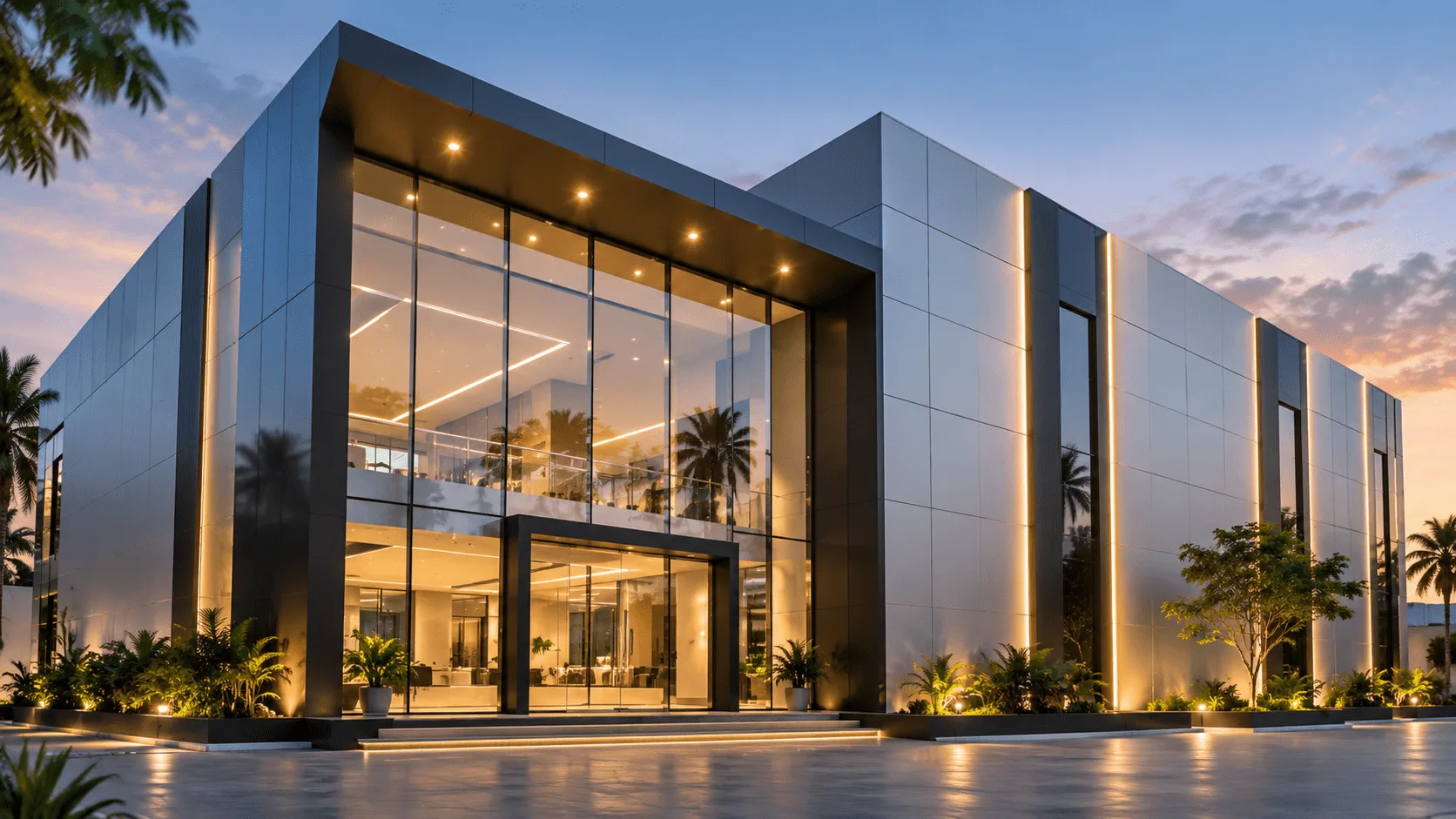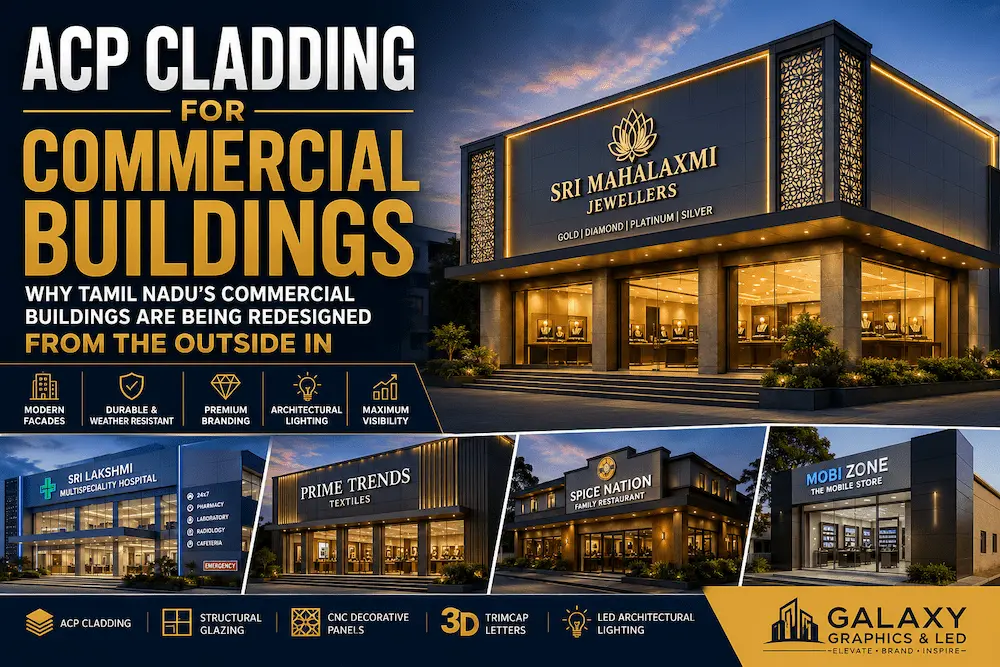
Before Akshaya Tritiya, Deepavali or the wedding season, a showroom street fills with people choosing where to go. Many decide from the pavement, long before they step inside. A showroom facade is the first piece of branding a customer sees, and it has to say who you are quickly. Aluminium composite panel (ACP) cladding is a practical way to do that, though jewellery and textile showrooms need quite different treatments. For offices and general commercial blocks, our commercial buildings and offices article covers that ground separately.
Jewellery Showroom Facades
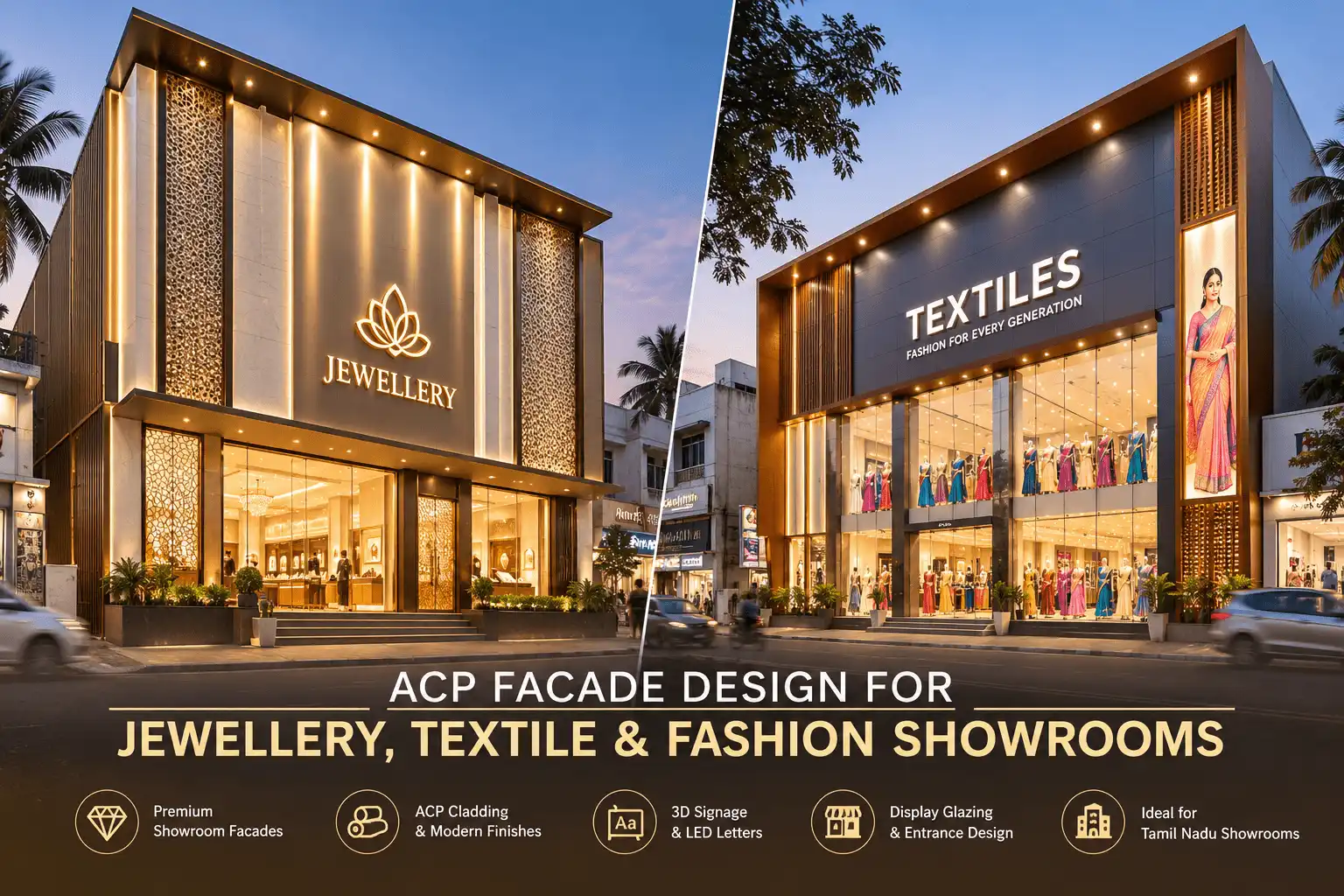
Jewellery is about trust, so the facade should feel calm and well finished. Restrained colour, clean lines and fine detailing usually work better than loud graphics. Champagne, bronze, deep green, charcoal or warm white panels suit the look, with crisp joints and accurate alignment, since small flaws show against a refined palette. The entrance deserves the most attention: a framed portal or canopy, a clear glazed door and a clean wall for the brand name. In places like T. Nagar in Chennai, Madurai’s temple-town streets or Kanchipuram, a subtle nod to local pattern can help, such as a fine CNC-cut band. Keep it measured, and see our CNC Jali & ACP Screens article for how such screens are planned. The cladding gives the building its appearance. Physical security comes from separate provisions such as security shutters, access control, door and lock specifications and suitable glazing, which are specified for each project.
Textile and Fashion Showroom Facades
Textile and fashion stores usually have a wider frontage and more to announce. Large-format branding, bolder colour and contemporary finishes suit them. A broad ACP fascia can carry the name at a size readable from across the road, while generous display glazing shows the collection at street level. In busy textile-trade towns such as Erode, Tiruppur or Rajapalayam, shopfronts often sit side by side, so a clean and consistent facade helps one stand out. Seasonal offers change often, so leave a defined space for banners instead of letting them cover the cladding.
Jewellery vs Textile Showrooms
| Jewellery | Textile & fashion | |
|---|---|---|
| Priority | Premium, refined appearance | Visibility, energy |
| Colour | Muted, metallic | Bolder or contemporary |
| Signage | Smaller, refined | Larger, high-impact |
| Glazing | Controlled, often smaller | Wide display windows |
These are tendencies rather than rules, and brand guidelines should decide in each case.
ACP Colours and Finishes
Metallic finishes bring depth and suit premium brands, though they show panel flatness and joints more clearly. Matte finishes look quiet and reduce glare in strong sun. Gloss gives vibrancy but shows dust and imperfections sooner. Wooden-look panels add warmth, particularly for boutiques. Several Indian ACP manufacturers, Aludecor among them, offer wide colour ranges and design support, and their downloads page is a useful place to compare shades and finishes. Always judge colours from physical samples in daylight, since screens and printed catalogues mislead.
Signage Integration
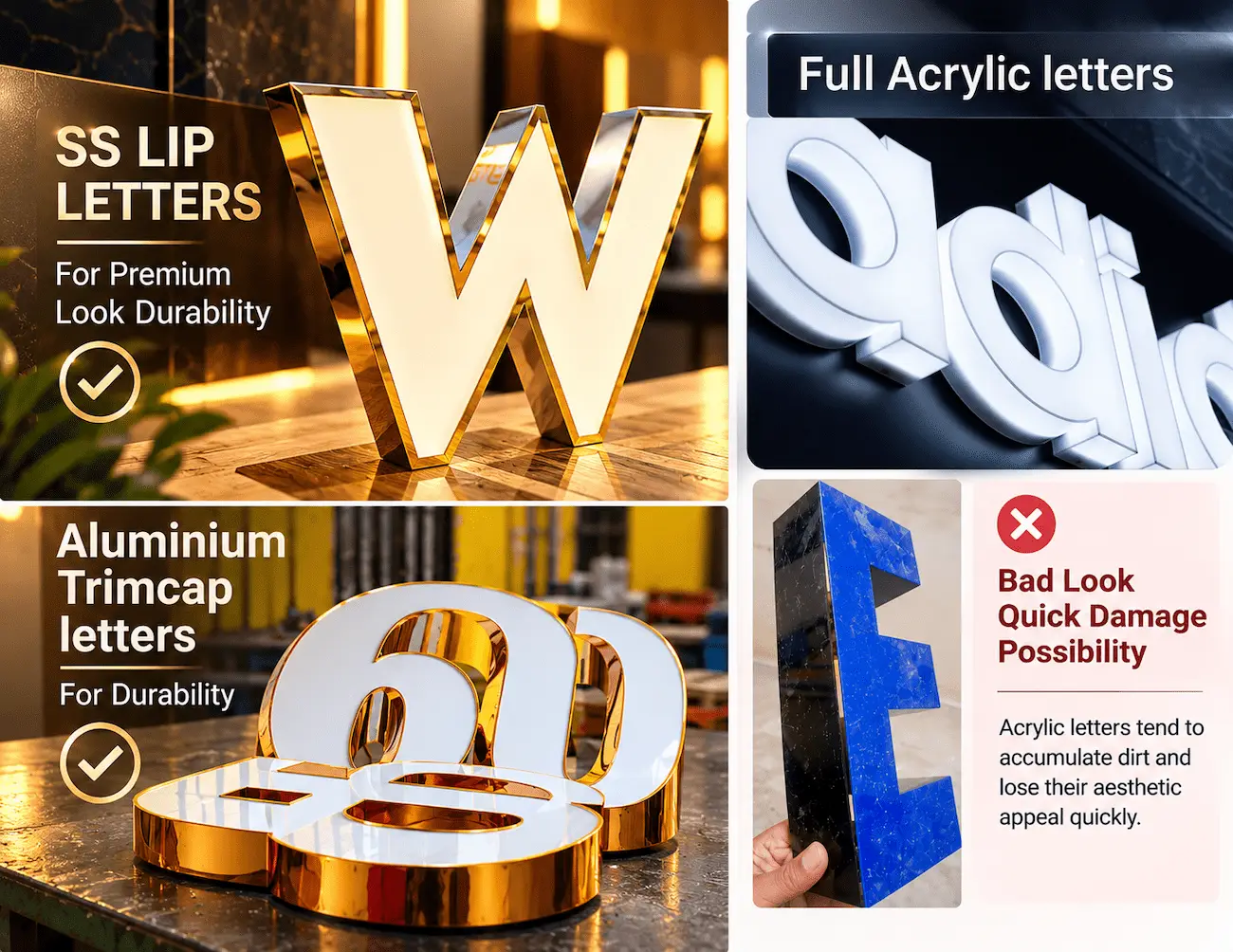
Signage works best when planned together with the cladding. ACP makes a clean background for lettering, with the panel grid helping to line up logos and names, and LED illumination, whether front-lit, halo or backlit, adds night presence. Cable routes and power points should be fixed before the panels go up, so nothing is cut through finished cladding later. Three letter constructions are commonly considered for showroom fronts.
SS Lip Letters for a Premium Look
SS lip letters combine a stainless steel outer lip with a finished letter face, creating a refined appearance. They are often considered for premium storefronts where the quality of the signage contributes to the overall brand image. The final durability depends on the stainless steel grade, fabrication quality, installation and exposure conditions.
Aluminium Trimcap Letters for Practical Durability
Aluminium trimcap letters use an aluminium trimcap around the letter face. They are a popular option for illuminated signage and can provide a neat finish with a defined edge. Correct fabrication, suitable LED components, proper sealing and professional installation are important for long-term performance.
Why Full Acrylic Letters May Not Suit Every Project
Full acrylic letters can provide a clean, modern appearance, but their performance depends on the acrylic grade, thickness, letter design, adhesive system and installation conditions. Poor-quality acrylic, weak joints or unsuitable adhesive can lead to cracking, separation or other damage over time. Dirt and weather exposure can also affect their appearance.
For commercial storefronts in Tamil Nadu, full acrylic letters should not be selected based on appearance alone. Where durability and long-term maintenance are important priorities, SS lip letters or aluminium trimcap letters may be preferable, provided they are fabricated and installed to the required standard. Acrylic can still be appropriate for certain applications when the material and construction are suitable.
The best signage option should be chosen according to the building design, brand requirements, budget, lighting needs and site conditions.
Entrance, Glazing and Lighting
The entrance should be easy to spot from the road, with a canopy or change of material marking it. Display glazing shows the stock, though large west-facing glass can add heat and glare, so shading and glass type deserve thought. Lighting should be coordinated with the facade: concealed strips along the canopy, soft wash on the cladding and well-aimed signage lights. Over-bright or mixed colour temperatures can make a premium brand look cheap.
Materials and Installation
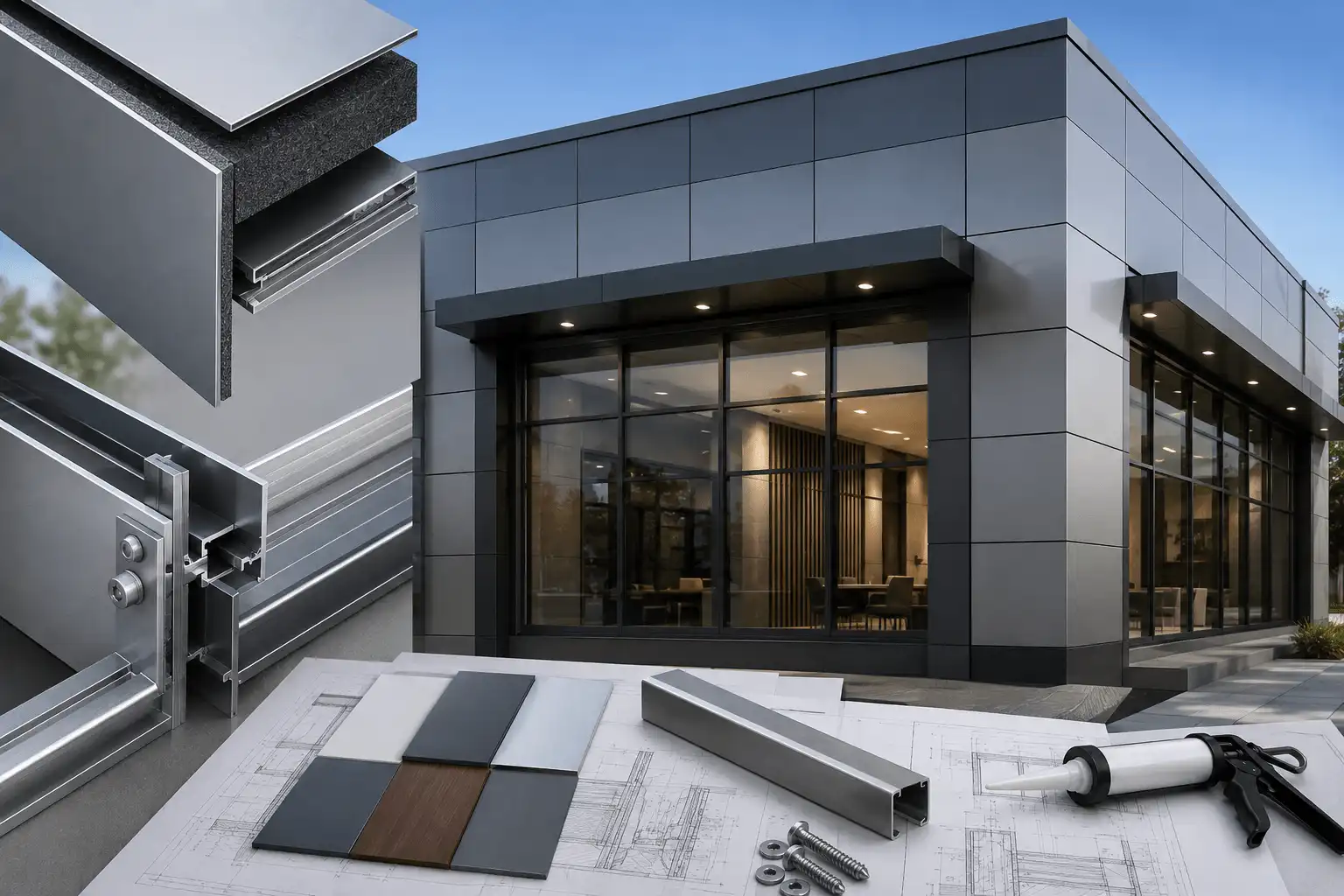
ACP grade selection should be based on the project, not on thickness alone. Thickness does not establish the fire performance of a panel, let alone the complete facade. Check the core type, the declared fire classification and the manufacturer’s technical documentation, and confirm the requirements that apply to your building with the architect and the local authority. A panel’s classification does not by itself prove that the installed facade assembly complies, so fire-safety questions need project-specific advice. The sub-frame and fixings should be designed for the site’s wind conditions, with joints sealed and detailed to shed water. Good workmanship matters as much as material, particularly alignment, sealant finish and neat edges. Our ACP cladding service page explains how design, fabrication and installation are coordinated.
Budget and Maintenance
Cost depends on facade area, panel grade and finish, sub-frame complexity, signage type, lighting and site access. Premium finishes and illuminated signage generally add more than plain cladding. Maintenance is mostly regular washing, since dust and monsoon splashes collect on ledges. Plan access for cleaning, and choose coatings with a documented warranty. Lower-quality coatings may show earlier fading under prolonged sun.
Project Planning
Start with accurate site measurements, then gather the brand’s colour codes, logo files and signage rules. Agree a design drawing or 3D view before fabrication, and approve a sample panel. Make sure the facade contractor, signage supplier, glazing team and electrician work to the same drawings, so no one cuts into finished work.
Conclusion
A jewellery showroom wants quiet confidence and a textile showroom wants clear, confident presence. Both can be served by ACP when design, signage and workmanship are planned as one.
Planning a Jewellery or Textile Showroom Facade?
Share your building frontage, preferred design and signage requirements with Galaxy Facade to discuss a suitable ACP cladding and signage solution for your project. Contact us to discuss your requirements or request a quotation.